Loading content… / 正在加载内容…
Understanding Scale-Up vs. Scale-Out in AI Infrastructure
Jun 19, 2025
%22%3E%0A%20%20%20%20%3Cpath%20fill-rule%3D%22evenodd%22%20clip-rule%3D%22evenodd%22%20d%3D%22M7.5%208.38892L10.0002%2011L10.7074%2010.2929L8.5%207.97471V4H7.5V8.38892ZM8%2015C4.13401%2015%201%2011.866%201%208C1%204.13401%204.13401%201%208%201C11.866%201%2015%204.13401%2015%208C15%2011.866%2011.866%2015%208%2015ZM8%2014C4.68629%2014%202%2011.3137%202%208C2%204.68629%204.68629%202%208%202C11.3137%202%2014%204.68629%2014%208C14%2011.3137%2011.3137%2014%208%2014Z%22%20fill%3D%22%23777%22%2F%3E%0A%20%20%3C%2Fg%3E%0A%20%20%3Cdefs%3E%0A%20%20%20%20%3CclipPath%20id%3D%22clip0_13_2114%22%3E%0A%20%20%20%20%20%20%3Crect%20width%3D%2216%22%20height%3D%2216%22%20fill%3D%22%23777%22%2F%3E%0A%20%20%20%20%3C%2FclipPath%3E%0A%20%20%3C%2Fdefs%3E%0A%3C%2Fsvg%3E)
440360

Share:


%22%3E%0A%20%20%20%20%3Cpath%20fill-rule%3D%22evenodd%22%20clip-rule%3D%22evenodd%22%20d%3D%22M8.35386%209.76783L9.06096%2010.4749L6.93964%2012.5963C5.96333%2013.5726%204.38042%2013.5726%203.40411%2012.5963C2.4278%2011.6199%202.4278%2010.037%203.40411%209.06072L5.52543%206.9394L6.23253%207.6465L4.11121%209.76782C3.52543%2010.3536%203.52543%2011.3034%204.11121%2011.8891C4.697%2012.4749%205.64675%2012.4749%206.23254%2011.8891L8.35386%209.76783ZM9.76807%208.35361L11.8894%206.23229C12.4752%205.6465%2012.4752%204.69676%2011.8894%204.11097C11.3036%203.52518%2010.3539%203.52518%209.76807%204.11097L7.64675%206.23229L6.93964%205.52518L9.06096%203.40386C10.0373%202.42755%2011.6202%202.42755%2012.5965%203.40386C13.5728%204.38017%2013.5728%205.96309%2012.5965%206.9394L10.4752%209.06072L9.76807%208.35361ZM6.23269%209.06074L6.93979%209.76785L9.76822%206.93942L9.06111%206.23231L6.23269%209.06074Z%22%20fill%3D%22rgba(119%2C%20119%2C%20119%2C%200.8)%22%2F%3E%0A%20%20%3C%2Fg%3E%0A%20%20%3Cdefs%3E%0A%20%20%20%20%3CclipPath%20id%3D%22clip0_13_1318%22%3E%0A%20%20%20%20%20%20%3Crect%20width%3D%2216%22%20height%3D%2216%22%20fill%3D%22rgba(119%2C%20119%2C%20119%2C%200.8)%22%2F%3E%0A%20%20%20%20%3C%2FclipPath%3E%0A%20%20%3C%2Fdefs%3E%0A%3C%2Fsvg%3E)

Gavin
InfiniBand Network Engineer
- Why AI Clusters Need Both Scale-Up and Scale-Out Networks
- Different Network Requirements in Scale-Up and Scale-Out
- Can Scale-Up and Scale-Out Be Unified?
- Case Study: How NVIDIA NVL72 Implements Scale-Up and Scale-Out?
- Future Trends in Scale-Up and Scale-Out AI Infrastructure
- In the End
In the ICT(Information and Communication Technology) domain, the concept of "Scale" is frequently encountered. It typically refers to enhancing the capabilities of an existing system to handle a greater workload. There are two primary scaling methods: Scale-Up (Vertical Scaling) and Scale-Out (Horizontal Scaling).
Scale-Up (Vertical Scaling): This involves boosting the performance of a single system by adding more resources, such as increasing processor speed, memory, or storage capacity. Essentially, it makes one system more powerful.
Scale-Out (Horizontal Scaling): This entails adding more systems with the same or similar configurations to distribute the workload. It means scaling by increasing the number of independent systems working in parallel. Using a three-tier/two-tier Clos architecture, tens of thousands or even hundreds of thousands of GPUs can be connected to a unified cluster to support parallel training scenarios like DP/PP. Its core goal is to prioritize scale and manage costs.
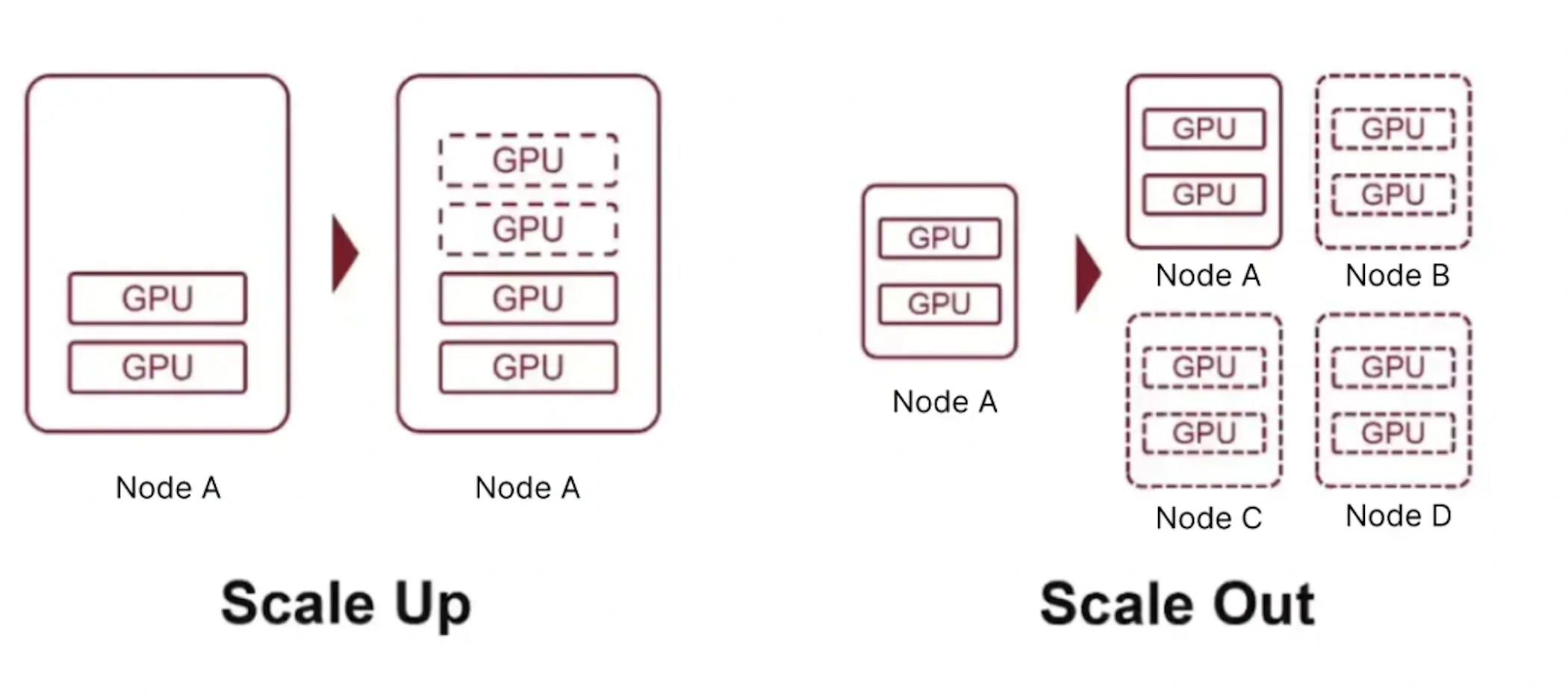
Example in Networking:
- Using a chassis-based switch and increasing capacity by adding more line cards represents the Scale-Up model.
- Using multiple box switches with the same port density and expanding network access through CLOS or other distributed network architectures represents the Scale-Out model.
In many cases, Scale-Up and Scale-Out can be combined to build larger and more efficient networks.
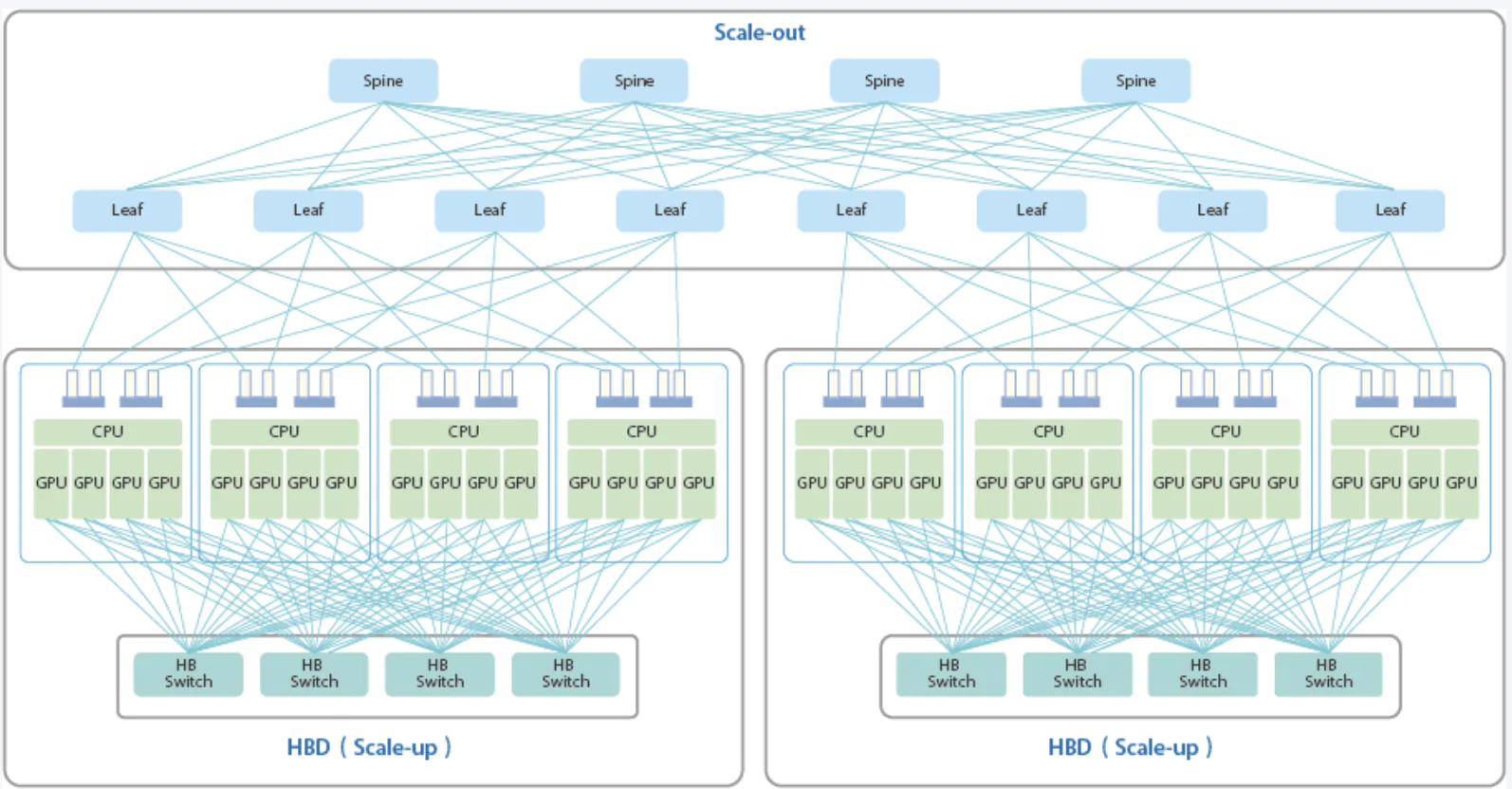
In today’s AI Computing Networks, both Scale-Up and Scale-Out networks coexist:
- Scale-Up refers to high-speed interconnects between GPUs, allowing cross-GPU memory read/write.
- Scale-Out refers to networks (ETH/IB) enabling RDMA between GPUs.
The synergy between Scale-Up and Scale-Out networks is what powers today’s AIGC large models.
Why AI Clusters Need Both Scale-Up and Scale-Out Networks
While both aim to enable memory-level data transfer between GPUs, their design purposes and application scenarios differ significantly. With the rise of large AI models, the scale continues to grow. A single GPU server is no longer sufficient. Parallel computing becomes necessary, which introduces communication overhead, complexity in partitioning, and programming challenges. Transformers, with their attention mechanisms and feedforward layers, place high demands on memory and compute resources.
Ideally, one would have a super GPU chip capable of processing an entire large model alone. Since this is unfeasible, the model is split:
- High-frequency interaction parts (like tensor and expert parallelism) require high-speed, low-latency networks — this is the Scale-Up network, also known as a load-store or memory-semantic network.
- Independent parallel parts (like pipeline and data parallelism) are better served by more cost-effective and flexible methods — this is the Scale-Out network, utilizing Ethernet with optimizations like RDMA (e.g., RoCE).
While RDMA simulates memory access to some extent, it is not ideal for frequent small memory read/writes and is not a true memory-semantic network. This dual-network architecture balances performance and cost: Scale-Up focuses on ultimate performance and Scale-Out prioritizes flexibility and affordability.
Different Network Requirements in Scale-Up and Scale-Out
In large-scale model training, both network types support GPU-to-GPU data transfers, but they differ greatly in latency.
Network latency is the time data takes to travel through a network. It comprises:
- Static Latency: Relatively constant, determined by physical design and hardware performance.
- Dynamic Latency: Variable, influenced by network load and bandwidth utilization. Ethernet optimized via UEC, for instance, reduces dynamic latency.
Scale-Up: Extreme Performance with Nanosecond-Level Latency
This is a bus-domain network enabling direct GPU memory access. Since modern GPUs can run at over 1GHz (less than 1ns per cycle), ultra-low latency is critical. Scale-Up networks must achieve sub-microsecond latency or even lower. To achieve this, Scale-up network designs must be tightly coupled with specific application requirements, eliminating traditional transport and network layers while employing credit-based flow control and link-layer retransmission to ensure reliability. Simultaneously, addressing challenges from high-speed SerDes technologies—such as PAM4 signaling and 112Gbps/224Gbps implementations with DSP architectures—makes deterministic latency control critically important. Existing RS(544, 514) forward error correction (FEC) schemes may become inadequate at these speeds, necessitating exploration of new FEC approaches to further reduce latency.
Scale-Out: Millisecond-Level Latency with Greater Flexibility
In contrast, Scale-Out networks are inherently more flexible and diverse. They draw inspiration from traditional layered network architectures such as the OSI model, which allows them to support a wide variety of communication and data transmission needs. While this flexibility does come with compromises in latency performance, it also ensures the network can adapt to a broader range of application scenarios.
In a Scale-Out network, end-to-end latency is typically maintained between 1 to 10 milliseconds, ensuring users perceive the system as responsive. For compute-intensive tasks in AI and HPC environments, although ultra-low latency isn’t mandatory, stable low latency is still a key factor in achieving high performance. Scale-Out networks leverage the existing industrial ecosystem—including switches and optical modules—and apply performance enhancements such as UEC (Ultra Ethernet Consortium) and GSE (Generic Streaming Extensions) to reduce dynamic latency. However, due to the inherent complexity of the architecture, static latency remains relatively high.
The latency objectives of Scale-Up and Scale-Out networks diverge significantly. Scale-Up networks are engineered to drive round-trip times (RTT) from sub-millisecond down to sub-microsecond levels, emphasizing extreme low-latency performance. Scale-Out networks prioritize flexibility and cost efficiency, delivering millisecond-level latency suitable for a broad range of workload types. This distinction in latency performance is precisely what defines their different roles in AI, HPC, and other demanding computing environments.
To address the challenges of rapidly growing AI workloads, modern scale-out networks must support massive node expansion and unpredictable traffic bursts. Designed with these demands in mind, the Dilight 51.2T switch N9570-128QC delivers exceptional performance and scalability. With 128 high-density 400GE QSFP112 ports, it supports the interconnection of up to 128 GPU servers and can easily scale to network architectures with tens of thousands of nodes. Powered by the NVIDIA Spectrum-4 chip, this 400G AIDC switch uses Priority Flow Control (PFC) and Explicit Congestion Notification (ECN) to effectively manage congestion and minimize dynamic latency. Additionally, it supports Adaptive Routing (AR), enabling intelligent packet-level load balancing across multi-path networks. It resolves the issue of uneven static load distribution inherent in ECMP and effectively improves link utilization.
Can Scale-Up and Scale-Out Be Unified?
Merging Scale-Up and Scale-Out networks is impractical due to fundamental differences in their design, objectives, and implementation.
Scale-out networks, rooted in traditional data centers, connect geographically dispersed nodes for efficient, long-distance communication. They excel at remote transmissions, heterogeneous device interconnections, and diverse business communications. Scale-Up networks are a newer paradigm that enhances system capabilities by boosting single-device performance. These tightly integrated networks consolidate resources within limited physical space for significant performance gains, and they are deeply coupled with business logic.
In the AI and AGI era, intelligent computing network demands are rising. Simply enhancing traditional data center network's load-store capabilities or attempting to expand networks using load-store technology won't meet scale-up network needs. Their initial design premises differ, leading to significant distinctions in technical realization, performance, and cost-effectiveness.
From a business logic perspective, Scale-Up networks (like NVLink) align with load-store semantics, emphasizing direct, high-speed memory access. In contrast, Scale-Out networks (like InfiniBand) are based on message semantics, prioritizing flexibility and scalability. While some technical specifications might appear similar, this is merely a coincidence and doesn't indicate their potential for convergence or interchangeability.
Therefore, Scale-Out and Scale-Up networks should not be combined due to their inherent differences in technical philosophy, application goals, and business logic. Each plays an indispensable role in its specific domain, collectively advancing computing network technology.
Case Study: How NVIDIA NVL72 Implements Scale-Up and Scale-Out?
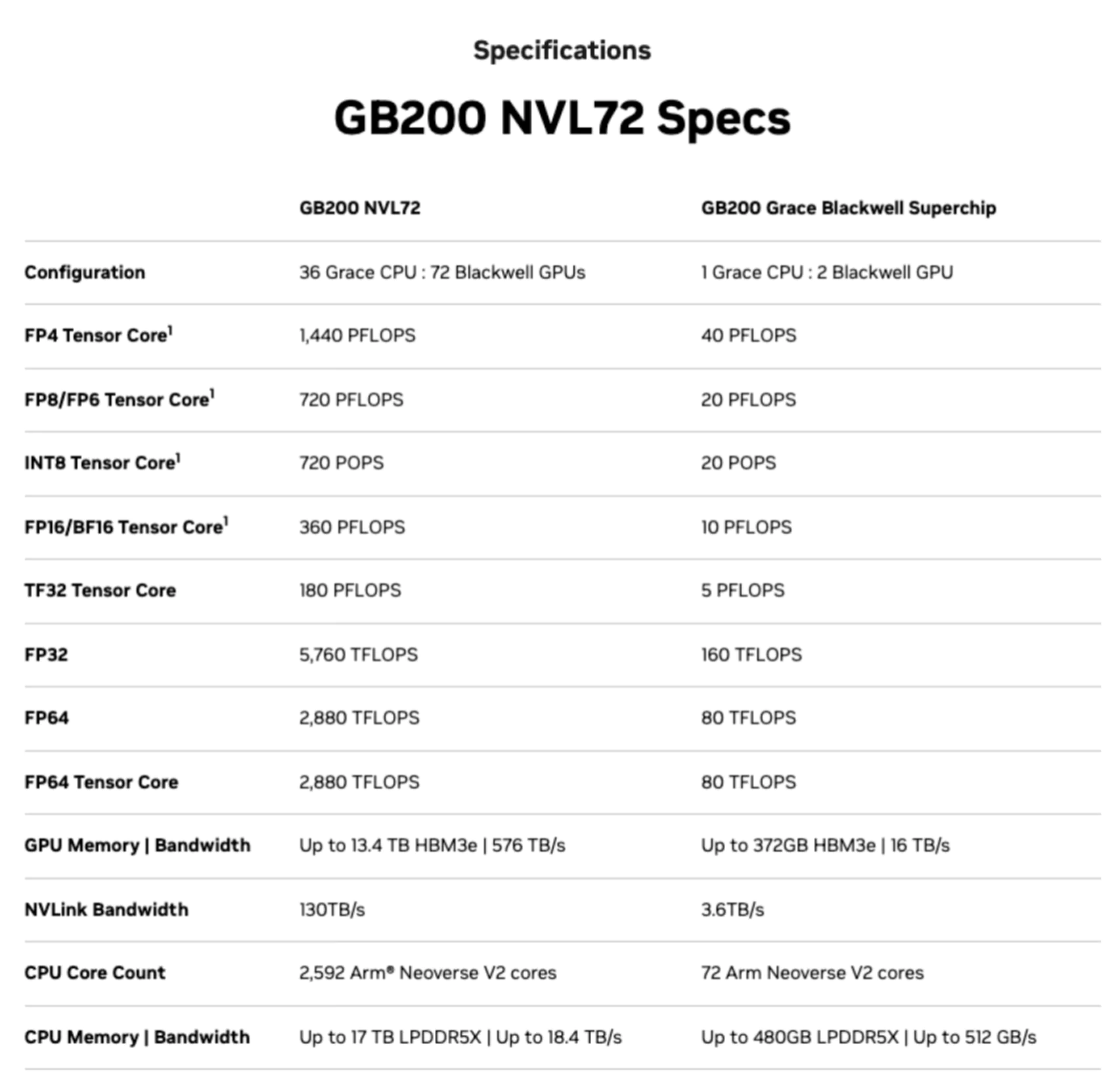
In March 2024, NVIDIA introduced the GB200 NVL72 SuperNode, integrating 36 Grace CPUs and 72 Blackwell GPUs into a single liquid-cooled cabinet. This system delivers up to 720 PFLOPs of AI training performance or 1440 PFLOPs for inference. Its architecture not only overcomes the inter-node bandwidth bottleneck seen in earlier generations like H100/GH200, but also combines "GPU-GPU NVLink Scale-Up" and "Node-to-Node RDMA Scale-Out" to provide scalable infrastructure for exabyte-scale data processing and trillion-parameter model training.
1. Scale-Up Network Interconnect
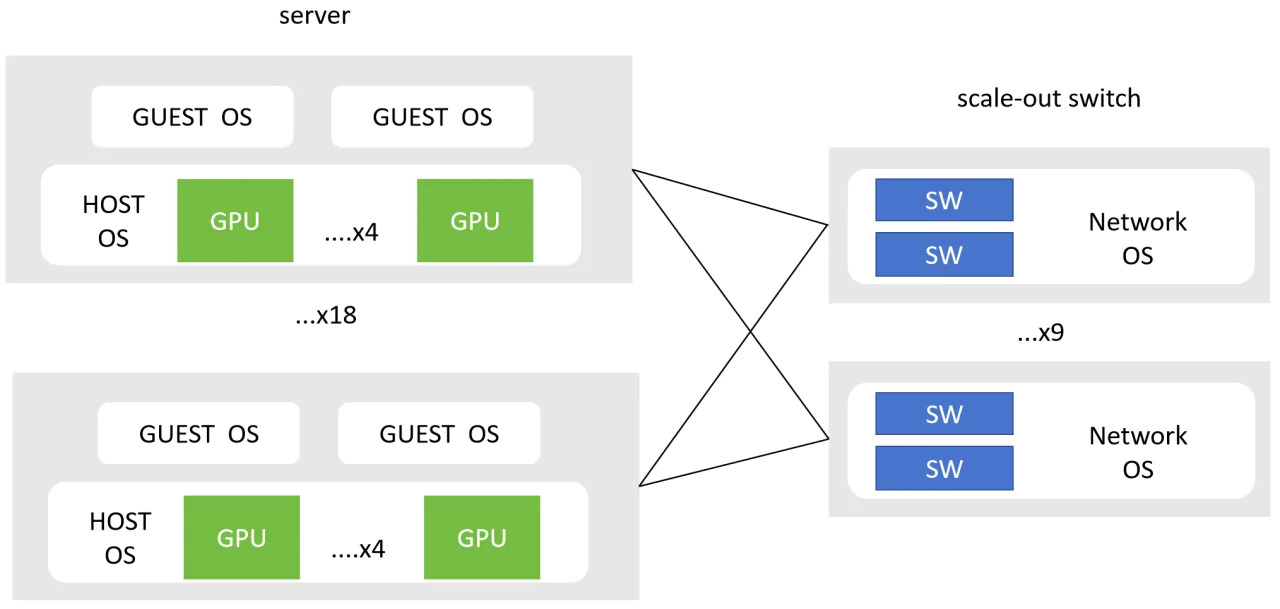
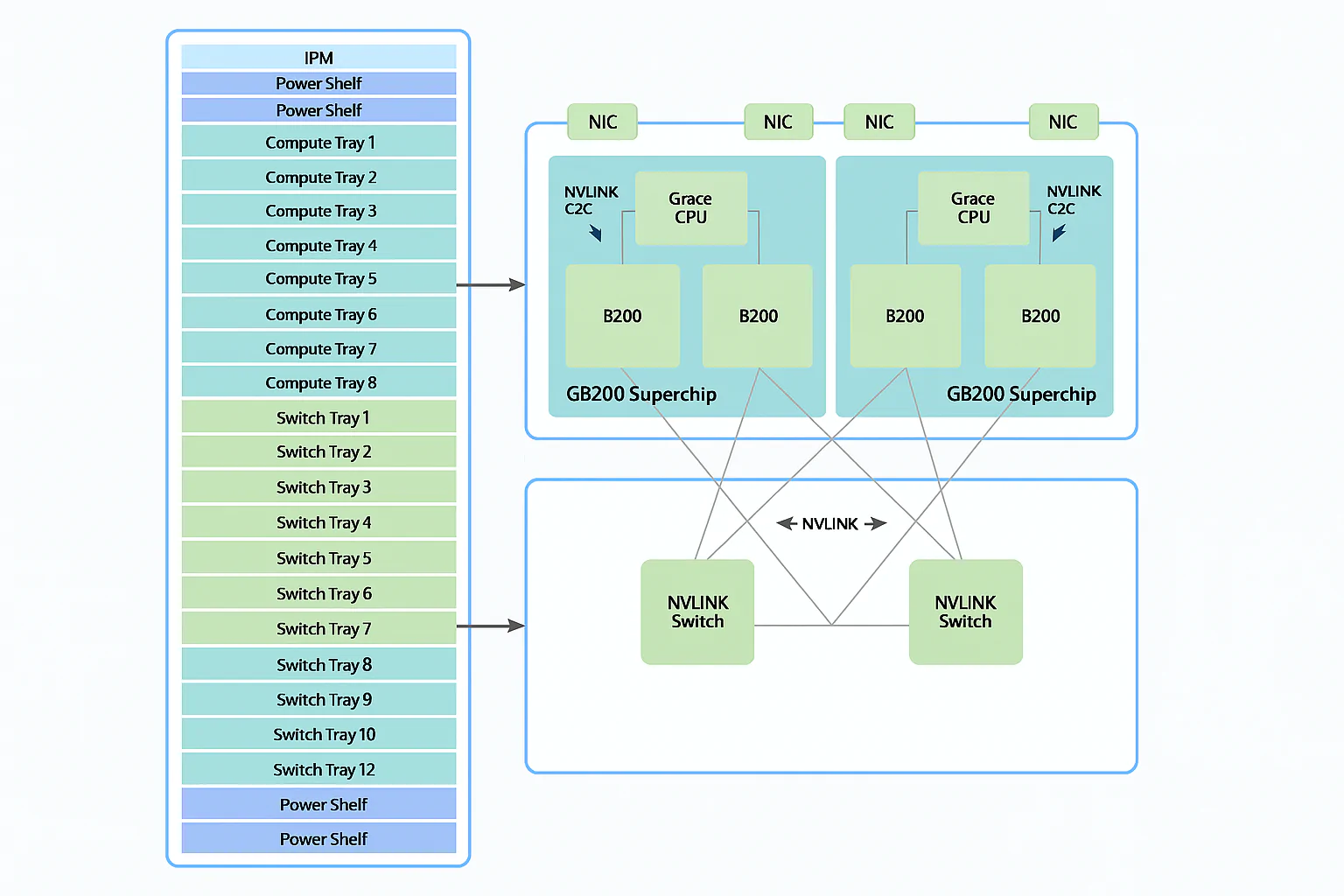
Within the SuperNode cabinet, 72 B200 GPUs housed across 18 Compute Trays are fully interconnected via NVLink 5 and copper cables, linking to 18 NVSwitch chips distributed across 9 Switch Trays.
Theoretical Bandwidth:
- Each B200 GPU supports 1.8 TB/s bidirectional bandwidth.
- Each Compute Tray (4 GPUs) offers 7.2 TB/s total bandwidth.
- All Compute Trays together provide 129.6 TB/s bidirectional bandwidth.
- Each NVLink Switch connects to 4 GPUs at 7.2 TB/s.
- One Switch Layer connects 8 GPUs at 14.4 TB/s.
- All 9 Switch Trays together connect 72 GPUs with 129.6 TB/s total bandwidth.
Physical Cabling:
- Each B200 GPU supports 18 NVLink connections to 18 NVSwitch chips, achieving full-mesh topology across 72 GPUs.
- Each Compute Tray (4 GPUs) requires 72 differential pairs.
- All 18 Compute Trays require 5184 differential pairs in total.
- One cable per differential pair means 5184 copper cables for the entire cabinet.
Cabling Medium:
The system uses a cable cartridge approach (copper-based interconnect). In short-range transmission scenarios, copper offers higher reliability and lower cost compared to optical modules, and simplifies cabling. As such, direct copper connections have become a mainstream solution for Scale-Up interconnects.
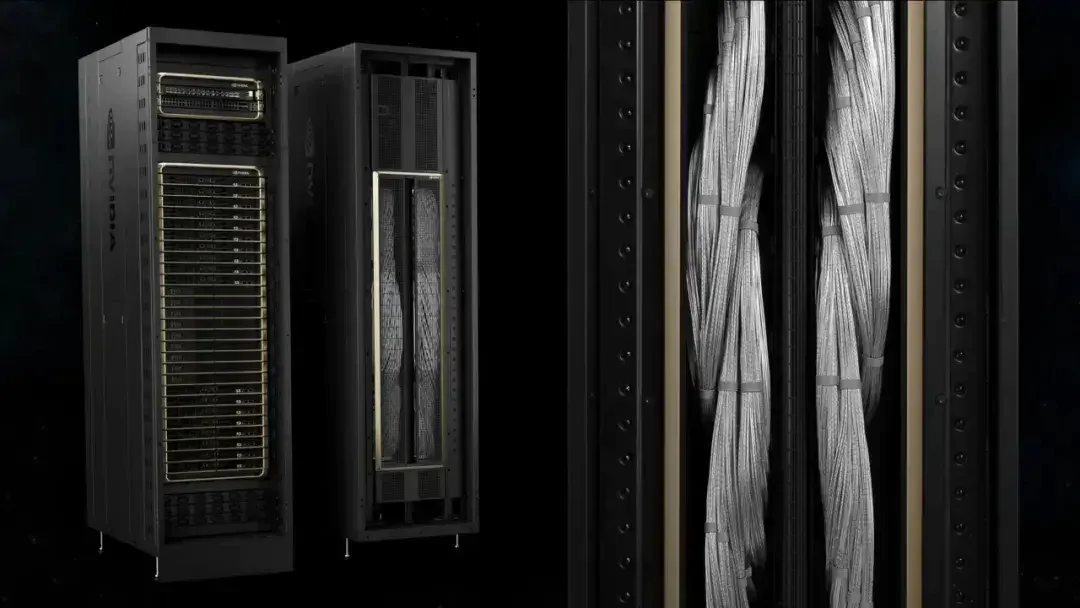
In short, NVL72 creates a massive Scale-Up network that enables high-bandwidth, low-latency communication between GPUs.
2. Scale-Out Network Interconnect
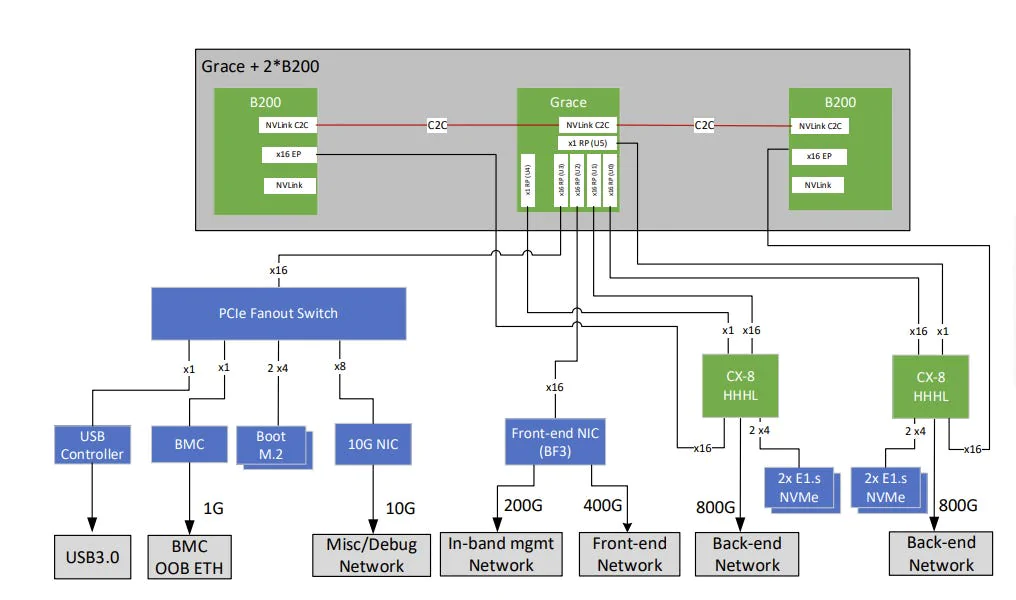
Scale-Out allows the integration of eight DGX GB200 NVL72 units into a SuperPOD with 576 B200 GPUs. Each Compute Tray equips each of its four GPUs with a CX8 800Gbps RNIC (RDMA NIC), connecting them to the InfiniBand RDMA-based Scale-Out network.
3. Scale-Up vs. Scale-Out in NVL72
NVL72’s Scale-Up interconnect offers:
- High Bandwidth: Each Compute Tray delivers 7.2 TB/s via NVLink/NVSwitch. In contrast, the Scale-Out connection offers only 0.4 TB/s (4 × 800Gbps), making Scale-Up bandwidth 18x greater.
- Low Latency: Copper cables eliminate the nearly 100ns latency typically introduced by optical modules’ CDR or DSP, while also reducing costs.
- Large Unified Memory: With NVLink and NVLink-C2C, all GPUs in the cabinet can access each other’s HBM memory as well as the Grace CPUs' DDR memory, totaling 13.5TB of HBM and 17TB of LPDDR5X system memory.
Future Trends in Scale-Up and Scale-Out AI Infrastructure
Network Architecture Evolution
On the Scale-Up side, the industry was traditionally dominated by Chassis SuperNodes, such as NVIDIA NVL72 and Huawei CloudMatrix384. These architectures emphasize reliability and build a stable interconnection domain through a "Cable Backplane + L1/L2 Switch" design. Electrical interconnects are used within the chassis to achieve high bandwidth, while optical interconnects are used between cabinets.
However, the emergence of Box SuperNodes after 2025 disrupted this pattern. By packaging multiple GPUs into independent boxes and directly interconnecting them through a first-level Clos switch, Box SuperNodes significantly reduce the number of switching layers and lower interconnect costs. At the same time, this architecture places higher requirements on first-hop optical connectivity and system reliability.
On the Scale-Out side, the dominant trend is simplification. Traditional three-layer Clos architectures are gradually being replaced by two-layer Clos networks through a flatter design approach. Advances in switch silicon have enabled Radix=512, allowing two-layer Clos networks to directly support over 130,000 GPUs without requiring a dedicated core layer. At the same time, multi-plane networking is gaining traction. DeepSeek proposed a "Mutli-plane architecture" in its ISCA paper: the AI-NIC accesses four Clos planes through four 200G ports, and the data packets of each flow are evenly distributed to different planes through Round-Robin. The receiving end uses DDP out-of-order write technology to reorganize the data, increasing the single-GPU Scale-Out bandwidth utilization to more than 95%.
Together, these trends show that Scale-Up architectures are becoming more flexible, while Scale-Out networks are becoming flatter and more scalable.
Optical Interconnect Evolution
Scale-Up pursues ultra-low latency and low power consumption, making the LPO/NPO transceiver that removes the DSP chip the preferred solution. 800G LPO optical transceivers consume only 6W, 60% less than 15W optical transceivers with DSPs. By eliminating the DSP's signal processing, they reduce one-way latency by 60ns and round-trip latency by 240ns. For example, Dilight's 800G LPO transceivers are optimized for AI data centers and meet the low power and latency requirements of Scale-Up architectures.
Scale-Out's demand for cross-vendor interoperability and long-distance transmission makes DSP-based optical transceivers difficult to replace.
BER Advantage: DPO transceivers with DSP support complex FEC (forward error correction) algorithms, achieving a corrected BER of up to 1E-15. However, the BER of LPO is only 1E-12~1E-13, which cannot meet the reliability requirements of Scale-Out long-distance (10km+) transmission. Whether it is DPO or LPO modules, when deployed in real production environments, reliability depends not only on lab-tested BER performance but also on system-level stability and long-term operational robustness, which is why “passing tests” does not necessarily mean the infrastructure is production-ready.
Cross-vendor interoperability is a must: Scale-Out clusters often use equipment from multiple vendors. LPO/NPO interoperability has yet to reach a unified standard. However, the DPO transceivers, based on the IEEE 802.3 protocol, enables seamless interoperability.
At this point, the technical divisions of optical transceivers are clear: Scale-Up chooses LPO/NPO, while Scale-Out chooses DPO/LRO. While these two technologies differ, they both share the core goal of achieving "224G optical speeds." In line with this trend, the industry has already begun developing related products. For example, Dilight's OSFP-1.6T-2xDR4 and OSFP-1.6T-2xFR4 support the high bandwidth and low latency requirements of future supernode architectures, laying the foundation for data centers to move toward the next stage of Scale-Up.
In the End
Large-scale AI models continue to grow, seemingly without limit, and place unprecedented demands on computing infrastructure. Building ultra-powerful supernodes using a Scale-Up strategy, and then extending them across clusters through Scale-Out, has become a common and efficient practice. This layered approach not only meets the performance and scalability needs of modern AI, but also lays a practical foundation for future innovation.
As a dedicated provider of AI networking solutions, Dilight leverages deep technical expertise and premium-quality products (including optical transceivers, AOC/DAC cables, switches and NICs, etc...) to help customers build cadvanced AI computing infrastructure. From scalable network architecture to precise optical interconnects, we deliver the demanding performance, reliability, and scalability required in AI era. Reach out to explore how we can support your intelligent computing networks.


Popular
Related Products:
NVIDIA/Mellanox MFP7E10-N020 Compatible 20m (66ft) MPO-12 APC (Female) to MPO-12 APC (Female) 12 Fibers Multimode (OM4) Jumper, Type B, LSZH, 3.0mm, Max IL ≤ 0.35dB, Magenta
US$ 55.00
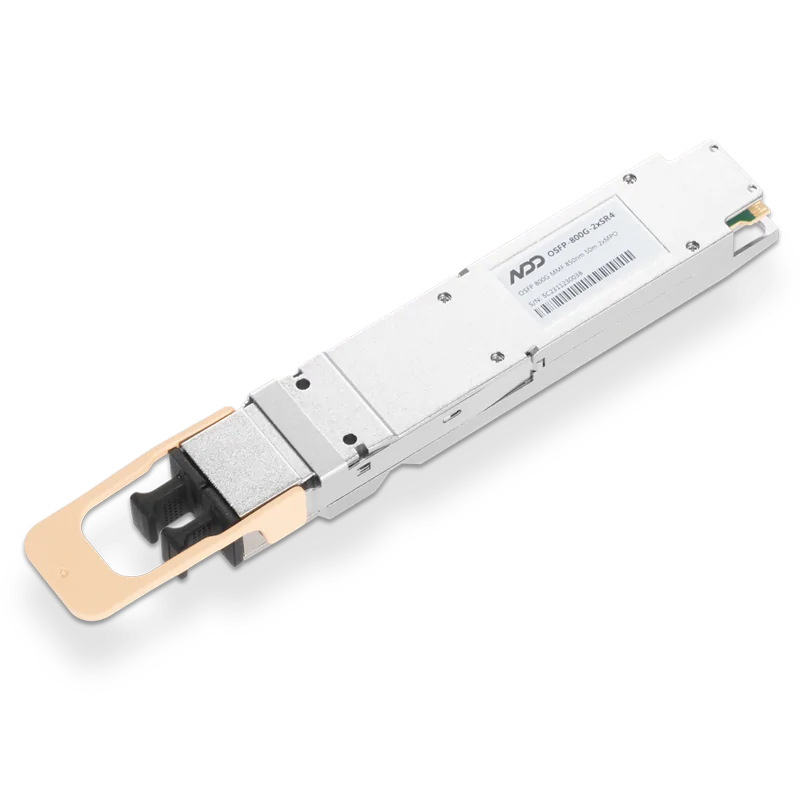
NVIDIA/Mellanox MMA4Z00-NS (980-9I510-00NS00) Compatible 800G 2xSR4 OSFP IHS/Finned Top 8x100G PAM4 Broadcom DSP & Broadcom VCSEL 850nm 50m MMF DOM Dual MPO-12/APC InfiniBand NDR Optical Transceiver Module
US$ 699.00
3m (10ft) NVIDIA/Mellanox MFA7U10-H003 (980‑9I41X‑00H003) Compatible 400G AOC OSFP IHS/Finned Top 8x50G PAM4 to 2x200G QSFP56 4x50G PAM4 InfiniBand HDR Active Optical Splitter Cable
US$ 928.00
NVIDIA/Mellanox MMS4X50-NM (980-9I30L-00N000) Compatible 800G 2xFR4 OSFP IHS/Finned Top 8x100G PAM4 Broadcom DSP 1310nm 2km SMF DOM Dual LC Duplex InfiniBand NDR Optical Transceiver Module
US$ 1,399.00
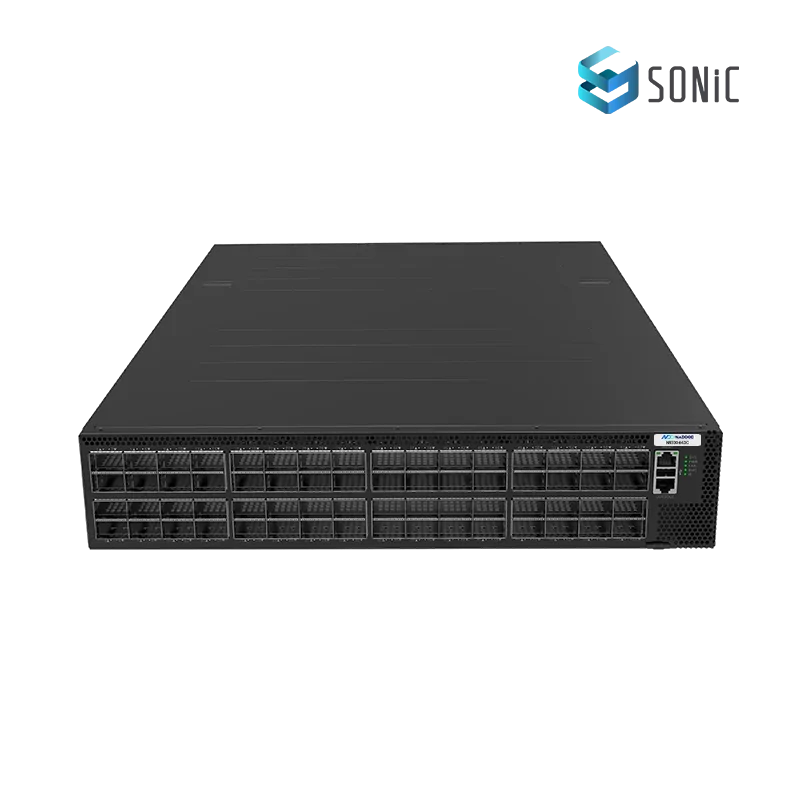
N9500-64OC, 64x 800Gb OSFP, Broadcom Tomahawk 5, 51.2Tbps, Enterprise SONiC by Dilight, for AI/ML/Cloud/HPC
US$ 29,999.00
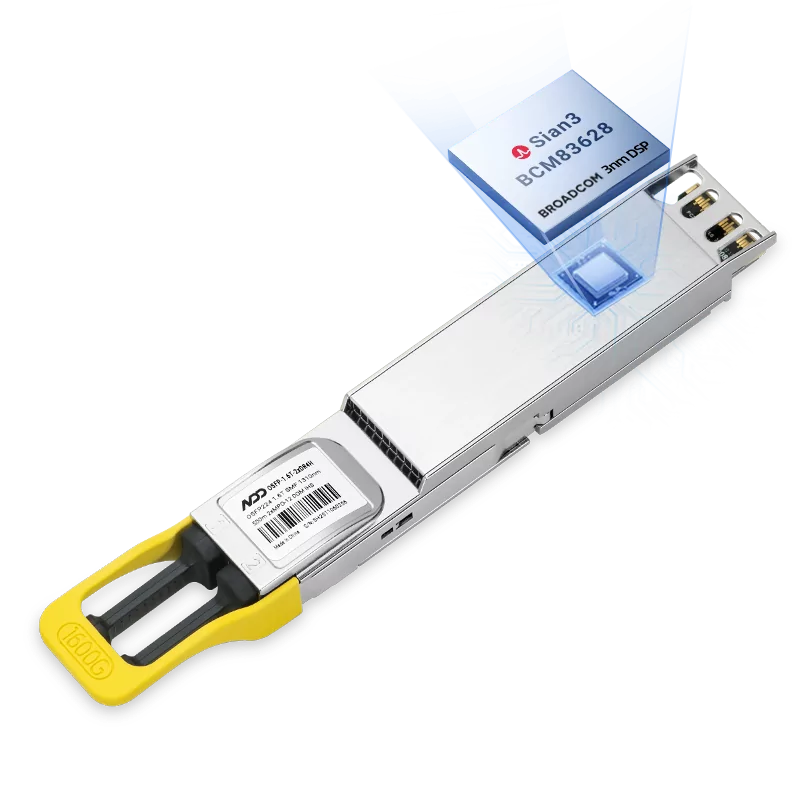
NVIDIA/Mellanox MMS4A00-XM/MMS4C10-XM/MMS4C11 (980-9IAH1-00XM00/980-9IAU0-00XM01/980-9IAU1-00XM01) Compatible 1.6T 2xDR4 OSFP224 IHS/Closed Finned Top 8x200G PAM4 Broadcom 3nm DSP (Sian3 | BCM83628) 1310nm 500m SMF DOM Dual MPO-12/APC InfiniBand XDR Optical Transceiver Module for Quantum-X800 Air-Cooled Switches
US$ 1,469.00
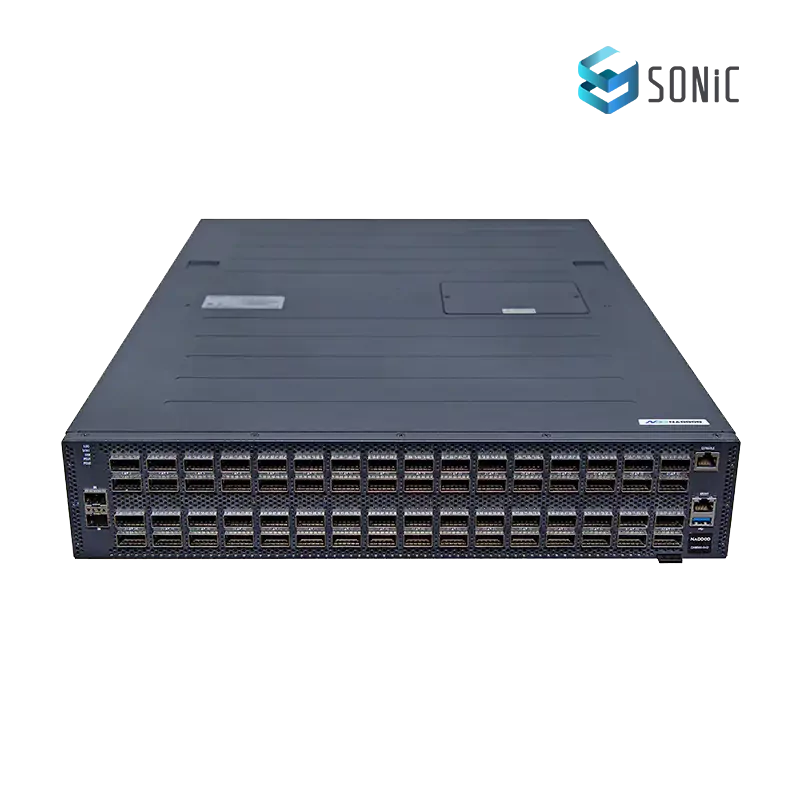
N9200-64DC, 64x 400G QSFP-DD, Broadcom Tomahawk 4, Enterprise SONiC by Dilight, High-Performance, Low-Latency, AI Fabric-Supported AI Data Center Switch
US$ 18,999.00
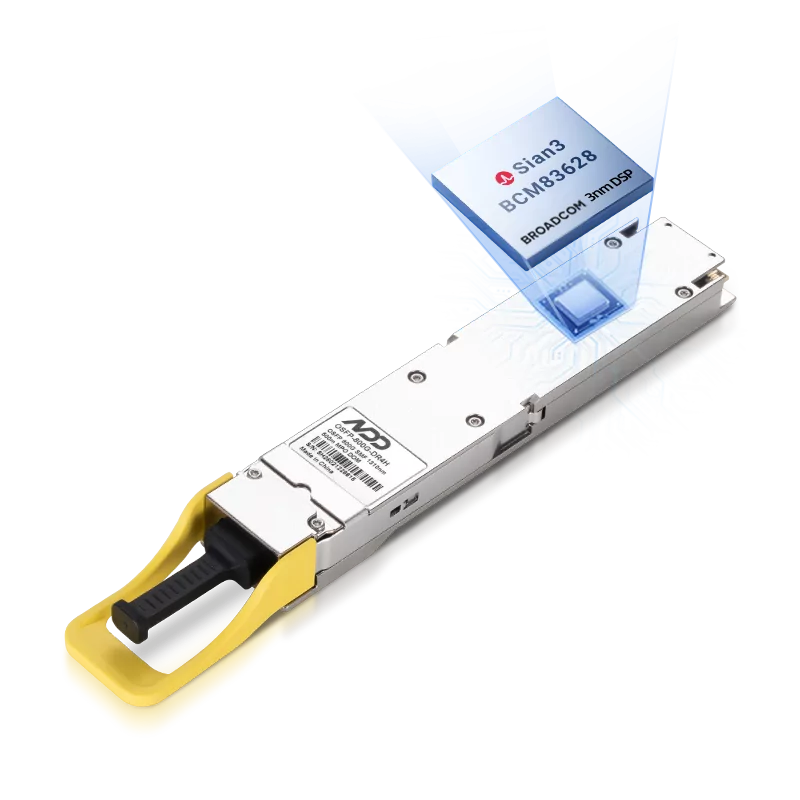
NVIDIA/Mellanox MMS4A20-XM800 (980-9IAT0-00XM00/980-9IAY0-00XM00) Compatible 800G DR4 OSFP224 RHS/Flat Top 4x200G PAM4 Broadcom 3nm DSP (Sian3 | BCM83628) 1310nm 500m SMF DOM MPO-12/APC InfiniBand XDR Optical Transceiver Module for ConnectX-9/ConnectX-8/B300/GB300
US$ 1,099.00
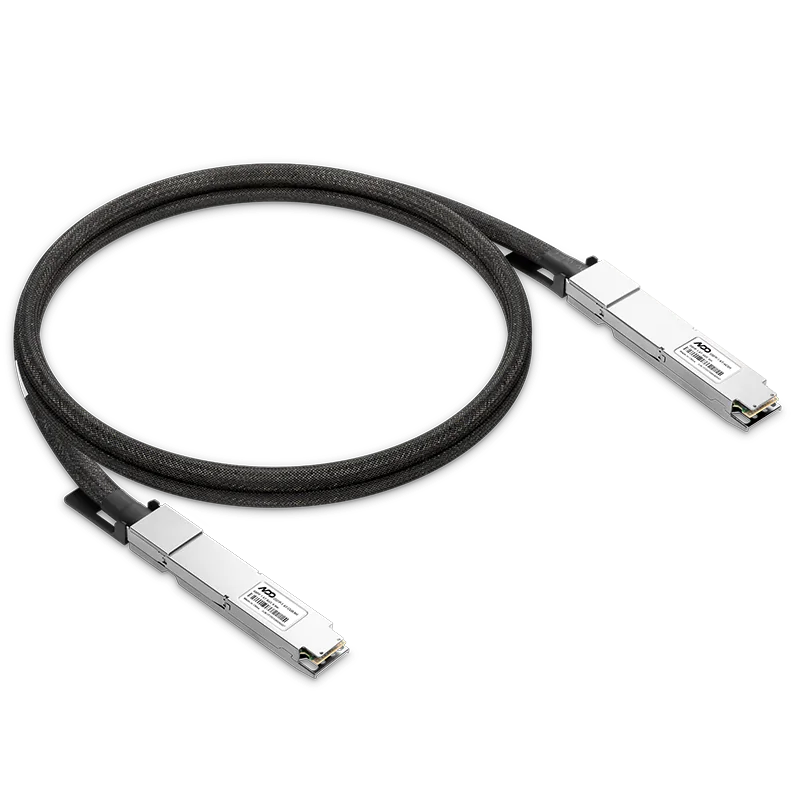
0.9m (3ft) NVIDIA/Mellanox Compatible 1.6T DAC OSFP224 IHS/Closed Finned Top 8x200G PAM4 to OSFP224 IHS/Closed Finned Top 8x200G PAM4 InfiniBand XDR Passive Direct Attach Copper Cable
US$ 469.00
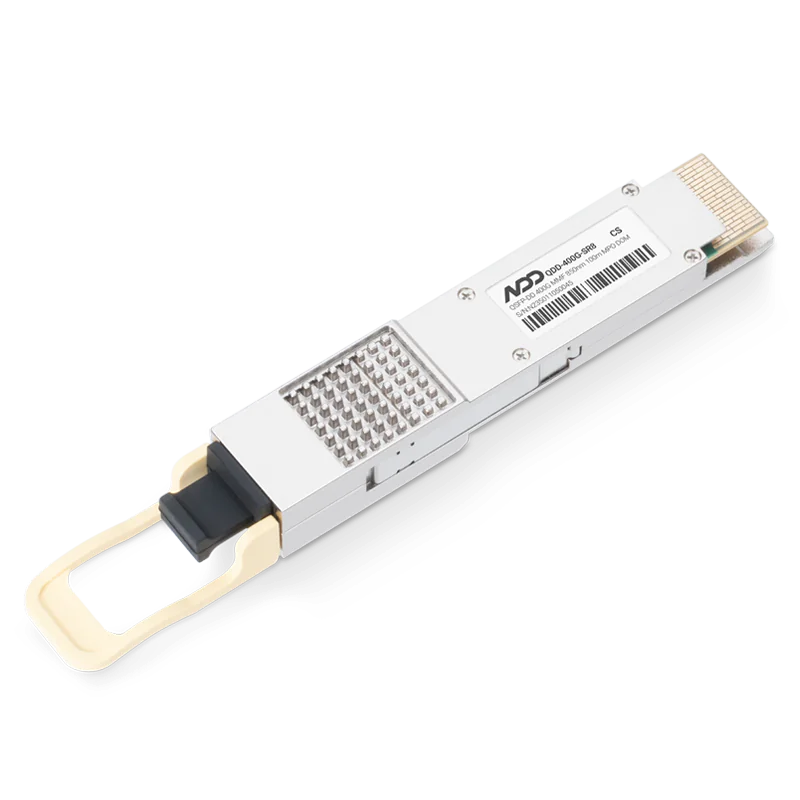
Arista QDD-400G-SR8 Compatible 400GBASE-SR8 QSFP-DD 8x50G PAM4 850nm 100m MMF DOM MPO-16/APC Optical Transceiver Module
US$ 159.00
Find the ideal optical and connectivity solutions to elevate your network!